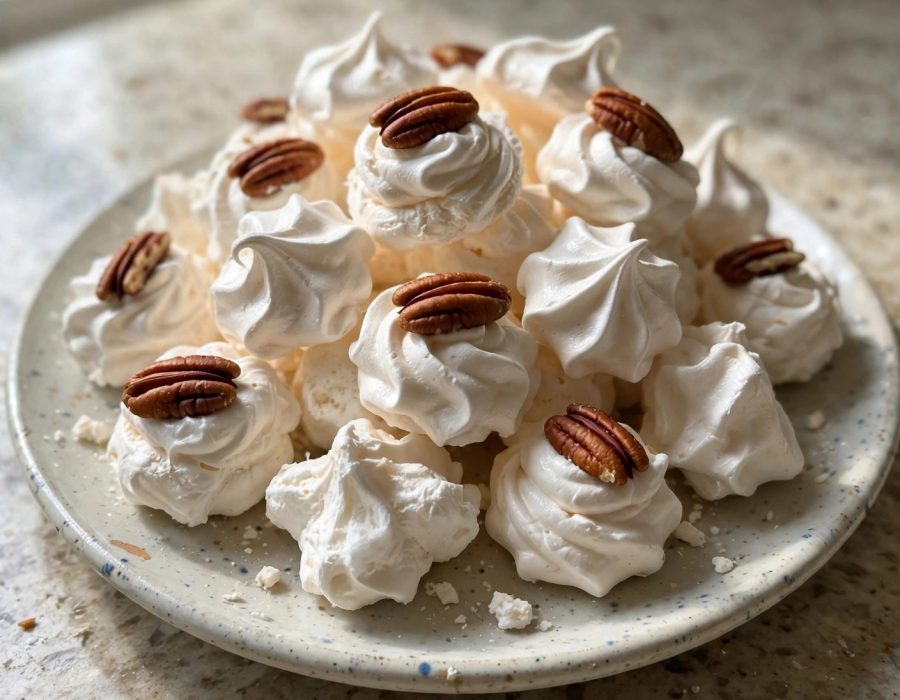
Divinity was Grandma’s weather report. If the sky was clear and the air was dry, she’d say, “It’s a divinity day,” and out came the candy thermometer before anybody could argue. This is her old-fashioned divinity — little white clouds of whipped sugar candy, light as meringue, melting as marshmallow, and studded with pecans all through.
She was not being fussy about the weather, and neither should you be. Divinity is mostly sugar syrup and beaten egg whites, and sugar is a sponge for moisture. On a humid or rainy day the candy drinks the damp air, refuses to set, and stays a sticky spoonful of regret. On a dry day, it whips up tall, holds its soft peaks, and sets into the most delicate candy ever to sit in a Christmas tin.
The other secret is her number: 260. Cook the syrup to exactly 260°F, pour it in a thread-thin stream over stiff egg whites, and beat until the shine goes dull and the candy holds a swirl. Do those two things — dry day, 260 degrees — and you will understand why Southern grandmothers have guarded this recipe like jewelry.
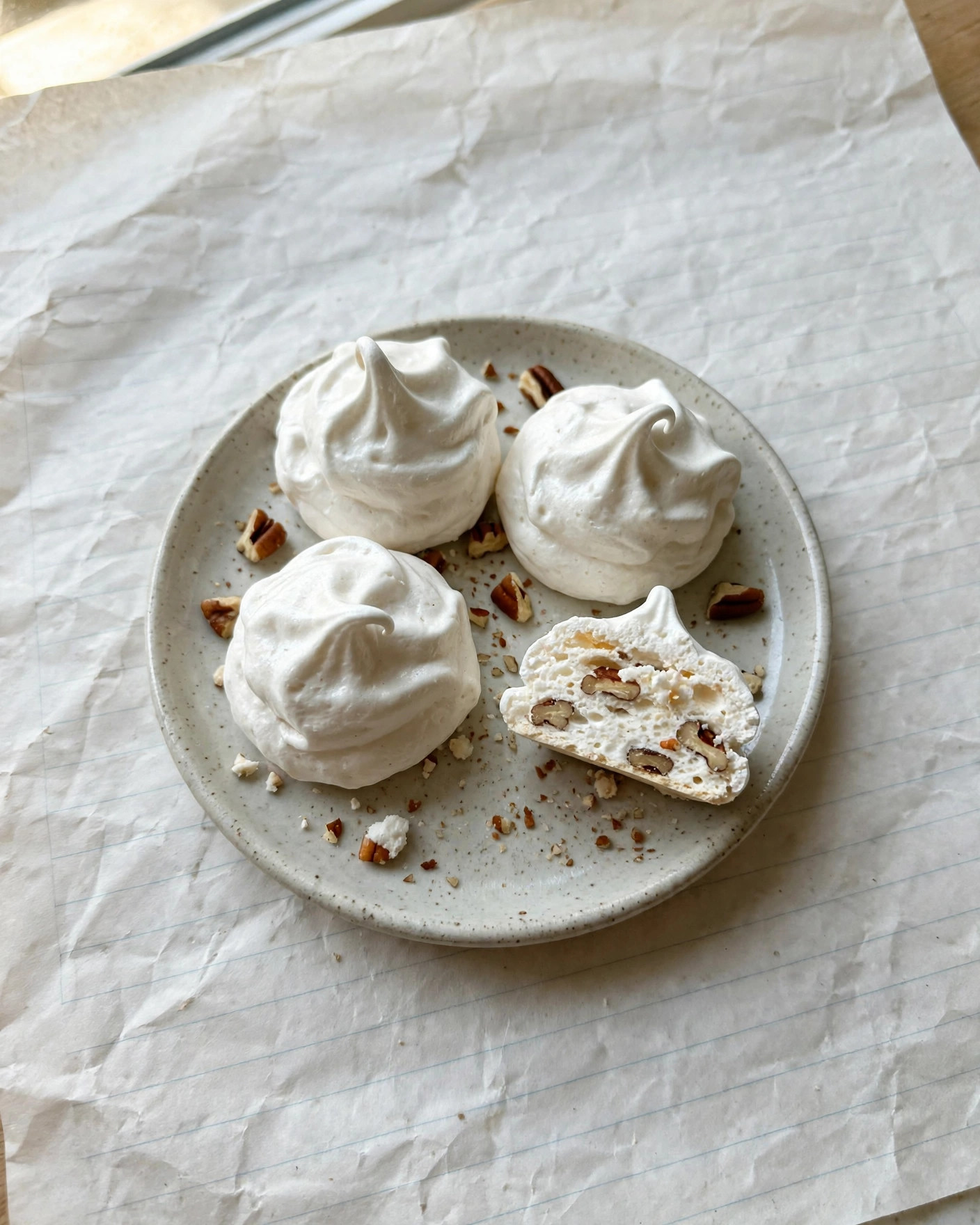
Why This Recipe Works
- Syrup cooked to 260°F (hard-ball stage) — hot enough that the candy sets firm and dry instead of staying sticky, which is where most divinity fails.
- Corn syrup in the pot — it keeps the sugar from crystallizing, so the finished candy is smooth and creamy instead of grainy.
- Syrup poured in a slow, thin stream — dribbling it over the beaten whites cooks them gently without scrambling, and the steady beating whips in the air that makes divinity float.
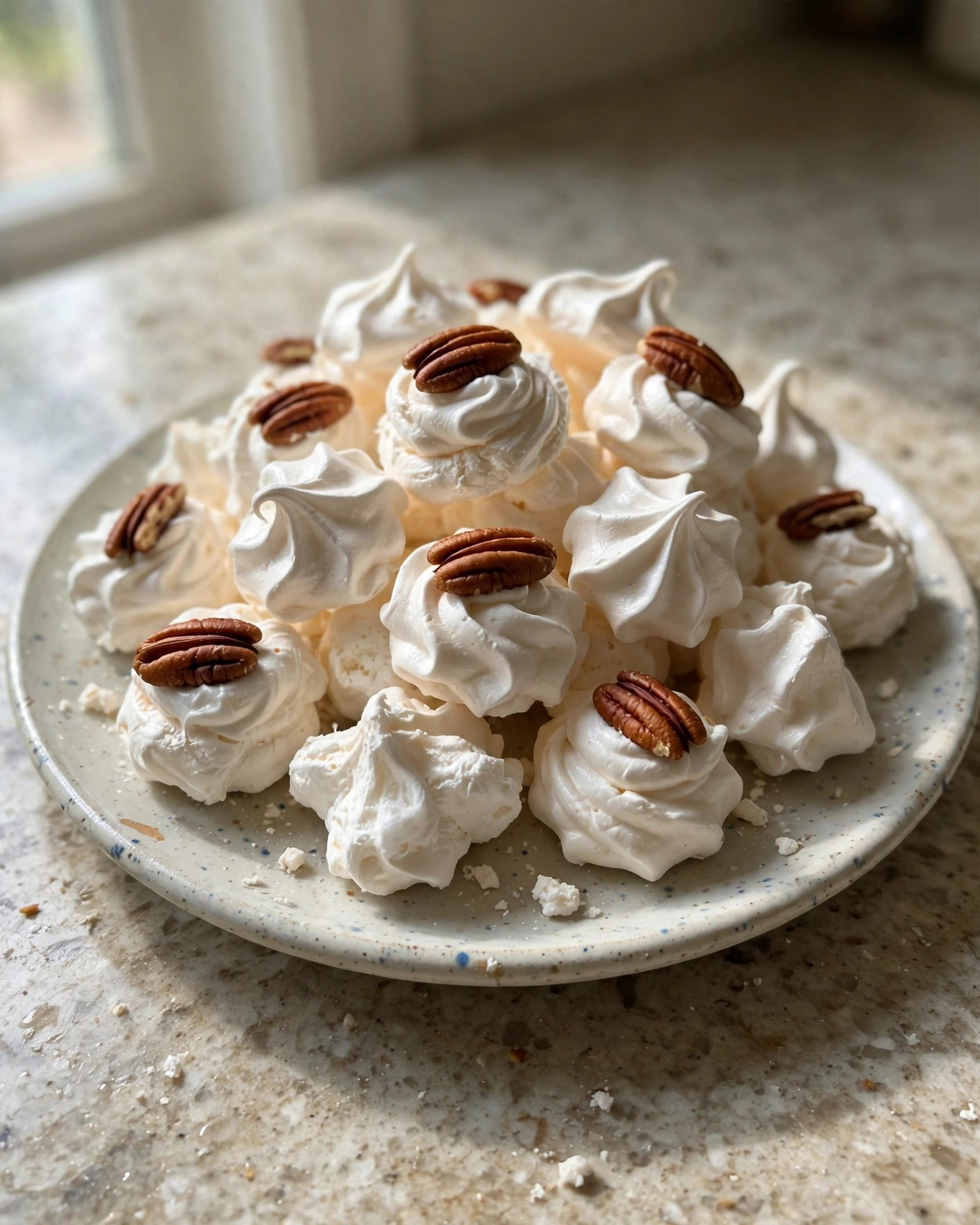
Old-Fashioned Divinity Candy
Ingredients
Method
- Check the weather first: choose a dry, low-humidity day. Line two baking sheets with parchment or waxed paper and set out two spoons for dropping.
- In a heavy 2-quart saucepan, stir together the sugar, corn syrup and water over medium heat until the sugar dissolves and the mixture comes to a boil.
- Stop stirring. Clip on a candy thermometer and cook the syrup, without stirring, until it reaches 260°F (127°C) — the hard-ball stage. This takes about 15–20 minutes. (Without a thermometer: a drop of syrup in cold water should form a hard ball that stays firm but still gives a little when squeezed.)
- When the syrup is close to temperature, beat the egg whites in a large, clean bowl with a mixer until stiff peaks form — they should stand up straight and hold.
- With the mixer running on medium-high, pour the hot syrup over the whites in a very slow, thin stream. Take your time — a full minute or two. Scrape the pan’s last drizzle in carefully; the syrup is hot enough to burn, so keep hands and helpers clear.
- Add the vanilla and keep beating on high until the candy loses its gloss, thickens, and holds its shape when the beater is lifted — 4–6 minutes more. It should look like stiff, dull marshmallow fluff. Stir in the chopped pecans by hand.
- Working quickly (it sets fast now), drop the candy by spoonfuls onto the prepared sheets, swirling the top of each piece with the back of the spoon. Press a pecan half on top if you like.
- Let the pieces stand at room temperature 1–2 hours, until firm and dry to the touch, before packing into a tin.
Notes
Remember it later
Like this recipe! Pin it to your favorite board NOW!
Grandma’s Tips
- Trust the thermometer, but know the stages. Soft-ball (234–240°F) makes fudge; hard-ball (250–266°F) makes divinity. Grandma cooked to 260°F, right in the hard-ball pocket — set, but still tender inside.
- Room-temperature egg whites whip higher. Set them out 30 minutes before you start. And the bowl must be spotless — one speck of grease or yolk and the whites won’t stand up.
- Beat until the gloss goes dull. Shiny candy is unfinished candy. When it turns matte and the beater leaves a trail that holds, start dropping immediately — you’ve got minutes, not leisure.
- Two spoons, buttered lightly. One to scoop, one to push. A whisper of butter on the spoons keeps the sticky candy from clinging.
- If it won’t set, don’t throw it out. Sticky divinity still tastes like heaven — spoon it over ice cream or use it as a cake filling and try again on a drier day, the way Grandma did more than once.
Frequently Asked Questions
Why didn’t my divinity set up?
Two usual suspects: humidity, or syrup that didn’t reach 260°F. If the day is damp the candy pulls moisture from the air and stays tacky no matter how long you beat it. Wait for a dry day and let the thermometer be the boss.
Can I make divinity without a candy thermometer?
You can, using the cold-water test: syrup dropped in cold water at the hard-ball stage forms a ball that holds its shape but still flattens a little when squeezed between your fingers. But a thermometer removes all the guesswork — Grandma owned one for this candy alone.
Why did my divinity turn grainy?
Sugar crystals got into the syrup — from stirring after it boiled, or crystals on the pan’s sides falling back in. Brush the pan sides with a wet pastry brush while it cooks, and don’t stir once it’s boiling.
Can I leave out the pecans or swap them?
Certainly. Walnuts are traditional in some families, maraschino cherries (well drained and chopped) are a church-cookbook favorite, and plain vanilla divinity is lovely on its own.
How long does divinity keep?
About 2 weeks in an airtight tin at room temperature with waxed paper between the layers. Keep it out of the refrigerator and away from a steamy kitchen, or it will soften.