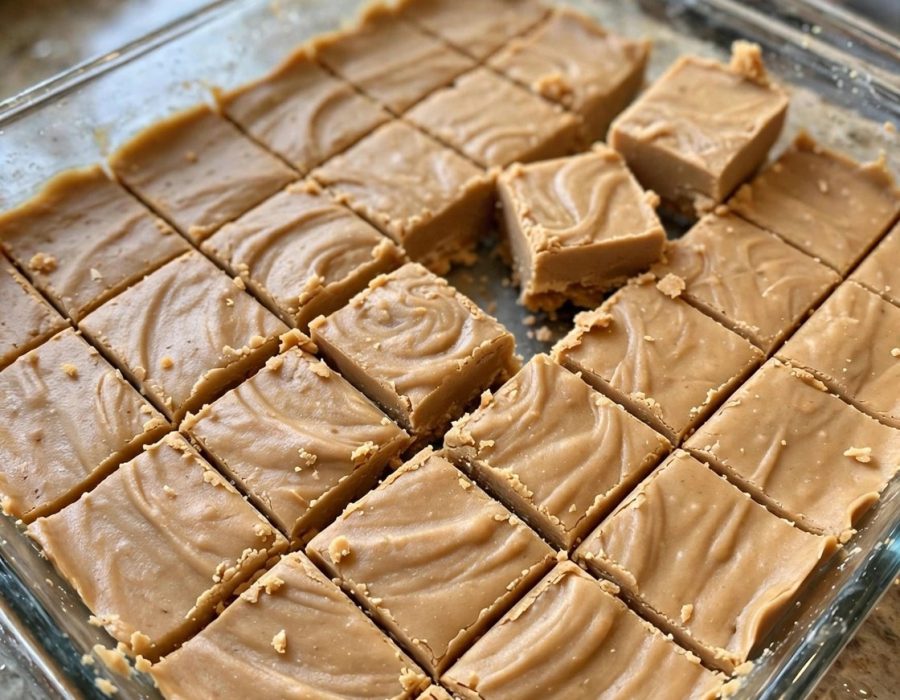
Come December, Grandma’s kitchen turned into a candy factory, and the first pan to disappear was always the peanut butter fudge. She’d cut it into little squares, stack them in a tin lined with wax paper, and hide the tin where she thought the grandchildren couldn’t find it. We always found it.
This is the real old-fashioned kind — sugar, milk, and peanut butter cooked on the stovetop to the softball stage, then beaten until it just loses its shine. That last part is the whole secret. Beat it too little and it never sets; too much and it turns to peanut butter sand in the pan. Grandma judged it by eye, and with the signs below, you can too.
You don’t need a candy thermometer if you know the cold-water test, but if you have one, it makes the recipe downright foolproof. Either way, one pan gives you three dozen pieces — enough for a cookie tin, a church supper, and a few squares hidden away for yourself.
Fair warning: this fudge comes together fast at the end, and there is no pausing once the pot comes off the heat. Read the recipe all the way through before you turn on the stove, set out everything you’ll need, and then commit. Fifteen calm minutes of preparation buys you a pan of candy that tastes like it took all afternoon.
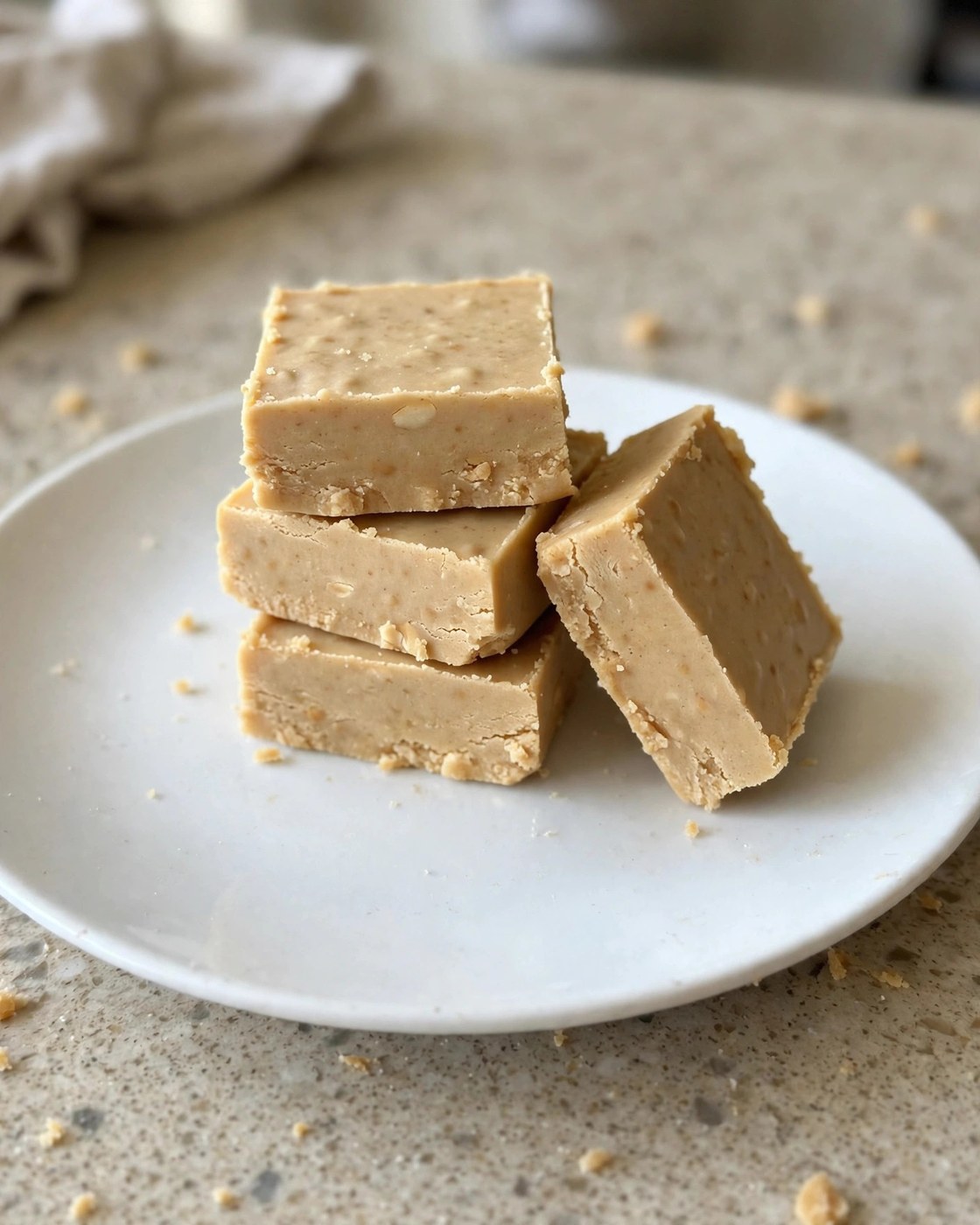
Why This Recipe Works
- Cooking to exactly 234°F (softball stage) sets the sugar structure that makes fudge firm but creamy, never grainy or runny.
- Beating off the heat until the mixture thickens and dulls creates the fine crystals that give old-fashioned fudge its melt-in-your-mouth texture.
- Peanut butter added after cooking keeps its flavor fresh and stops it from scorching on the bottom of the pot.
- A lined, buttered pan means the fudge lifts out cleanly for neat, giftable squares.
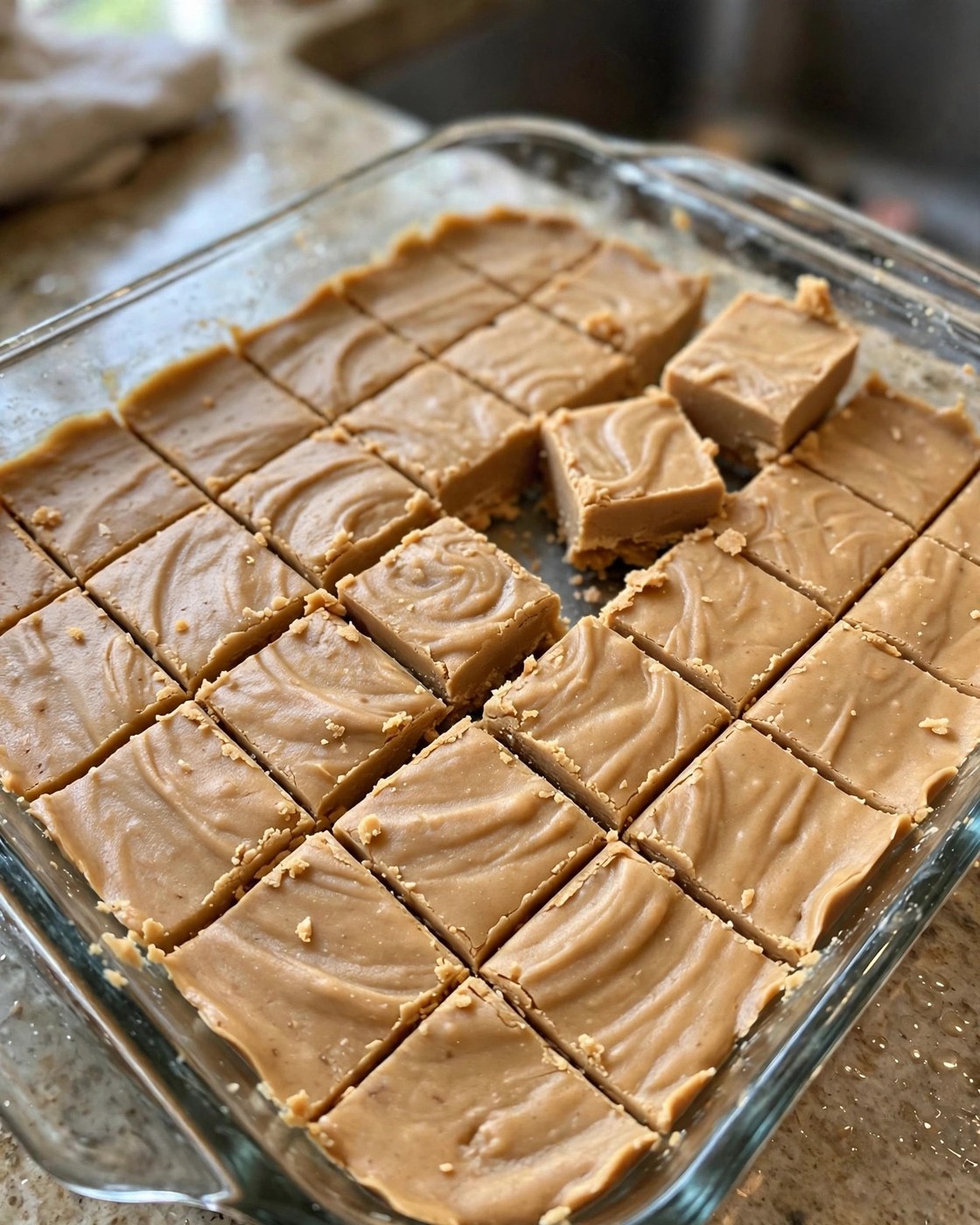
Old-Fashioned Peanut Butter Fudge
Ingredients
Method
- Line an 8×8-inch pan with parchment or foil, leaving an overhang, and butter it lightly. Have the peanut butter, vanilla, butter, and salt measured and waiting by the stove.
- Combine the sugar and milk in a heavy medium saucepan. Stir over medium heat until the sugar dissolves and the mixture comes to a boil.
- Stop stirring and boil until the mixture reaches 234°F on a candy thermometer (softball stage), about 4–5 minutes of boiling. If you have no thermometer, drop a little syrup into cold water — it should form a soft ball that flattens when you pick it up.
- Remove the pan from the heat at once. Add the peanut butter, butter, vanilla, and salt, and beat vigorously with a wooden spoon until the fudge thickens, turns matte instead of shiny, and starts to hold its shape — 2 to 3 minutes. Work quickly once it starts to set.
- Scrape the fudge into the prepared pan and smooth the top with a buttered spatula.
- Let it set at room temperature for about 30 minutes, then lift it out and cut into 36 small squares.
Notes
Remember it later
Like this recipe! Pin it to your favorite board NOW!
Grandma’s Tips
- Everything ready before you start. Once that fudge turns matte, you have seconds to get it in the pan. Grandma called it “no time to go looking for the vanilla.”
- A heavy pot matters. Thin pans scorch milk and sugar. Use your heaviest saucepan, or a Dutch oven for a double batch.
- Don’t scrape the pot sides while it boils — sugar crystals on the sides can make the whole batch grainy.
- Judge the beat by the shine. The moment the surface goes from glossy to dull, pour it. One minute too long and it sets in the pot.
- Cut with a warm knife. Run it under hot water and wipe dry between cuts for clean, pretty edges.
Frequently Asked Questions
Why is my fudge grainy?
It was either undercooked, beaten too long, or sugar crystals got stirred in from the sides of the pot. Cook to a full 234°F, avoid stirring once it boils, and beat only until it loses its shine.
Why didn’t my fudge set?
It didn’t reach the softball stage. Next time, let it boil a touch longer and double-check with the cold-water test. A soft fudge can be scooped into a jar and used as an ice cream topping — Grandma wasted nothing.
Can I use crunchy peanut butter?
Yes, and plenty of folks prefer it. The fudge will have little peanut bits throughout, which Grandma considered a feature, not a flaw.
Can I add marshmallow fluff to make it easier?
That’s a different (and perfectly good) recipe, often called fantasy fudge. This one is the older stovetop method without it — worth learning, because the texture is finer and the peanut flavor stronger.