
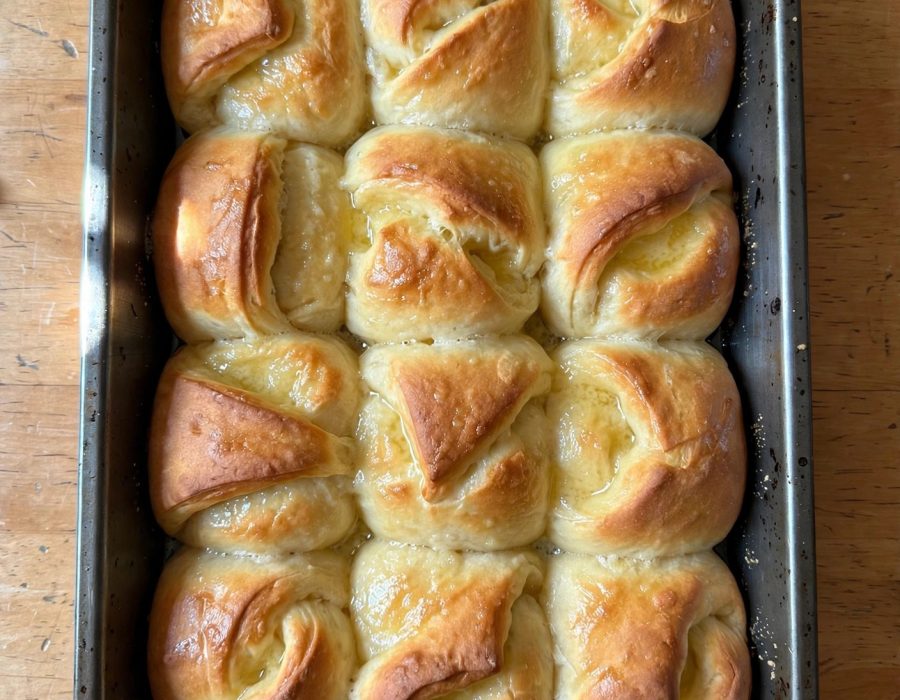
Every holiday table needs a roll worth reaching for, and in Grandma’s house that roll was always a Parker House. She’d set the pan down right in the middle of the table — golden tops shining with butter, each one folded over like a little pocketbook — and they’d be gone before the turkey was carved. Nobody ever took just one, and she knew it, so she always made them count.
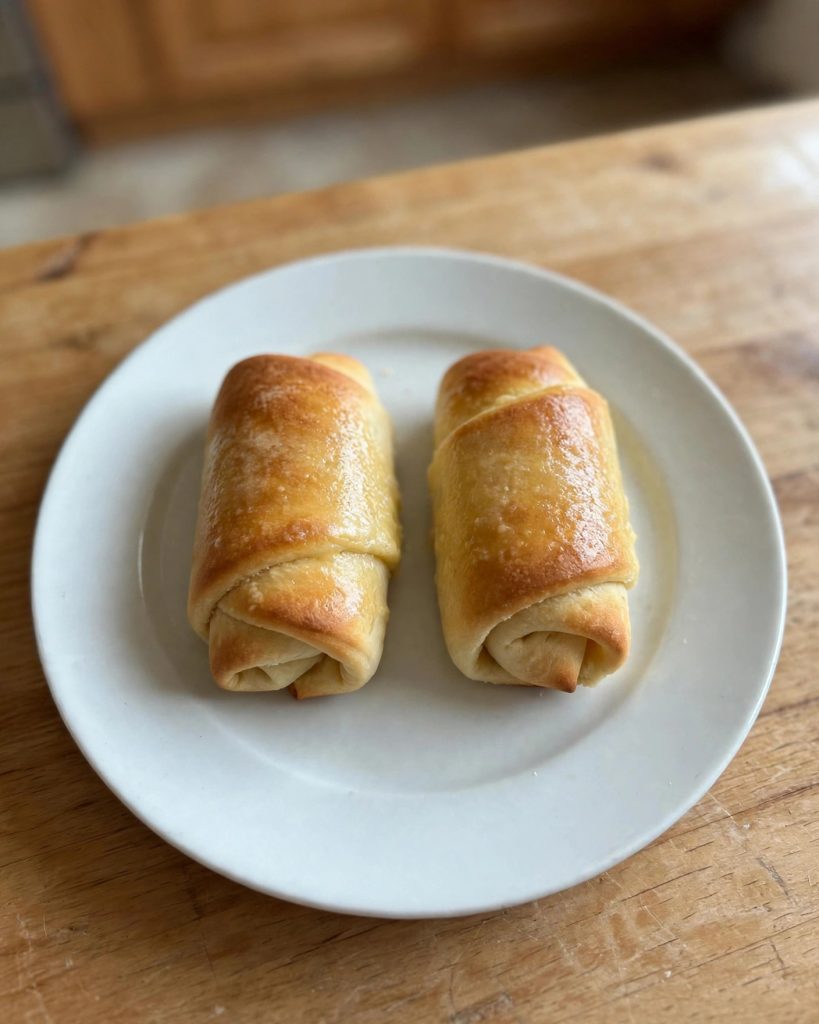
The secret is in that fold. Each round of soft, milky dough gets brushed with melted butter, folded over just off-center, and pressed shut. In the oven the fold opens into a tender seam, and the roll pulls apart in soft layers with butter in every bite. They’re rich without being heavy, and pillowy all the way through.
Yes, they take a little time — about 2 hours 30 minutes from start to finish, most of it hands-off rising — but there’s nothing hard in it. Mix, knead, let it rise, fold, and bake. Grandma called it “company bread,” and once you’ve torn one open warm from the oven, you’ll understand why it earned the name.
Why This Recipe Works
- Warm milk and a real rise — scalded-style warm milk makes a soft, tender crumb, and two rises give the rolls their light, pillowy pull.
- Butter before the fold AND after baking — butter inside the fold creates the tender layers, and a second brushing gives the tops their golden shine.
- The off-center fold — folding just past the middle makes the classic pocketbook shape that opens in the oven and pulls apart by hand.
Parker House Rolls
Ingredients
Method
- Warm the milk in a small saucepan over medium heat until it’s steaming and just beginning to bubble at the edges — about 180°F if you have a thermometer. Take it off the heat and stir in the 4 tablespoons of butter, the sugar and the salt until the butter melts. Let it cool until it’s warm to the touch, about 105–110°F — hot milk will kill the yeast.
- Sprinkle the yeast over the warm milk mixture, stir once, and let it sit 5–10 minutes, until foamy. If it doesn’t foam, the yeast is tired — start over with a fresh packet.
- Pour the yeast mixture into a large bowl, stir in the beaten egg, then add the flour 1 cup at a time, stirring until a shaggy dough forms.
- Turn the dough onto a lightly floured counter and knead 8–10 minutes, adding just a dusting of flour as needed, until the dough is smooth, soft and elastic and springs back when poked. It should be slightly tacky, not sticky.
- First rise: place the dough in a lightly greased bowl, turn it once to coat, cover with a clean kitchen towel, and let it rise in a warm, draft-free spot for 1 to 1 1/4 hours, until doubled in size.
- Gently punch down the dough and let it rest 10 minutes — this makes it much easier to roll. Grease a 9×13-inch baking pan with butter.
- On a lightly floured surface, roll the dough out to about 1/2-inch thick. Cut out rounds with a 3-inch biscuit cutter or a drinking glass, gathering and re-rolling the scraps once.
- Melt the remaining butter. Brush the top of each round lightly with butter, then use the dull edge of a butter knife to crease each round just off-center. Fold the larger half over the smaller half so the top edge sits about 1/2 inch back, and press the folded edge gently to seal. This off-center fold makes the classic pocketbook shape.
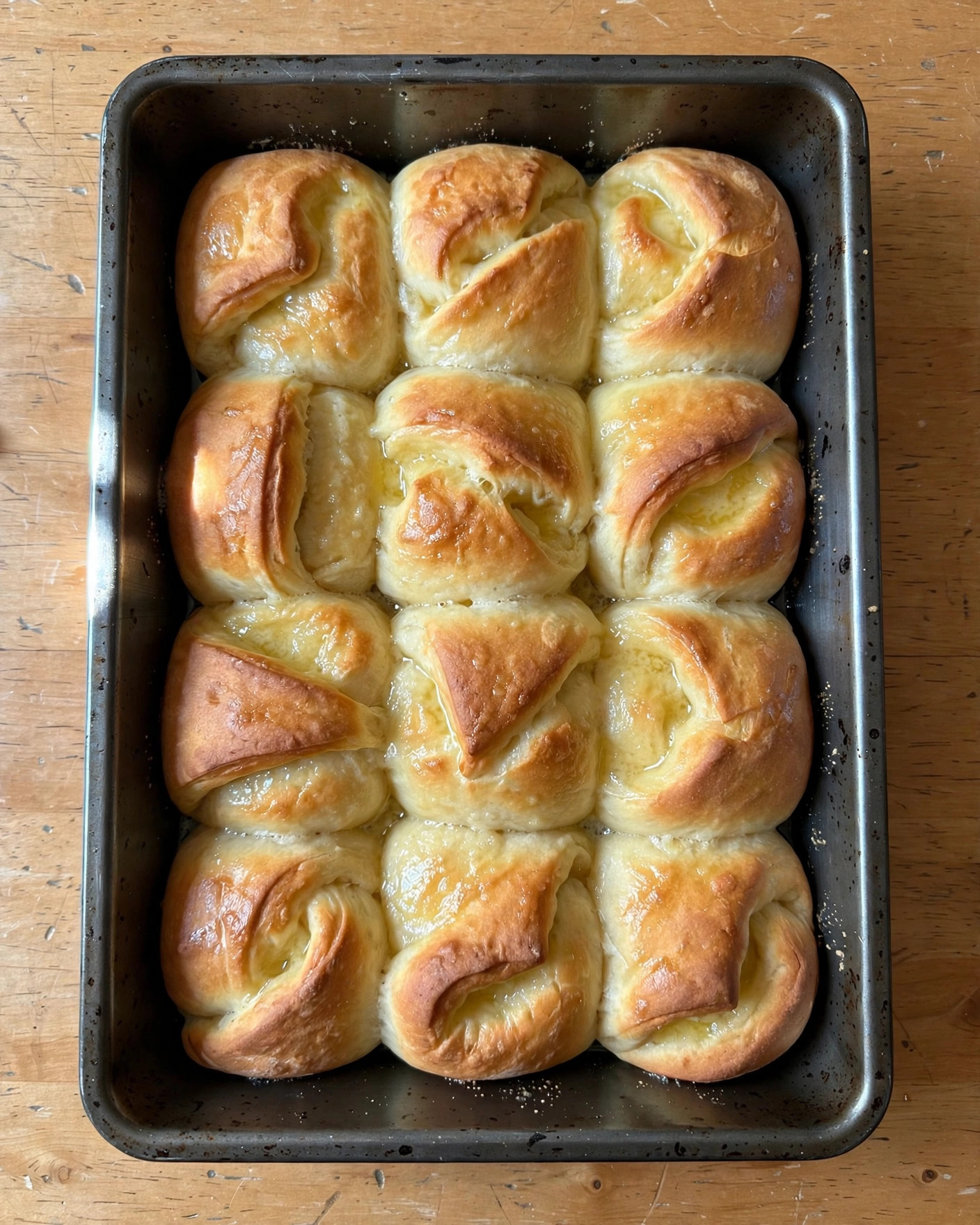
- Arrange the folded rolls in the prepared pan in 3 rows of 4, seam sides facing the same way, with the rolls just touching. Cover and let rise a second time for 30–40 minutes, until puffy and touching each other all over.
- While the rolls rise, heat the oven to 375°F (190°C).
- Bake 18–20 minutes, until the tops are deep golden brown and the rolls sound hollow when tapped.
- Brush the hot rolls generously with the remaining melted butter. Let them rest in the pan 5 minutes, then serve warm — they pull apart best right from the pan.
Notes
Grandma’s Tips
- Mind the milk temperature. Warm, not hot, is the whole game. If the milk feels hot on your wrist, wait. Yeast forgives a lot, but not a scalding bath.
- Don’t flour the rolls stiff. A soft, slightly tacky dough bakes up soft. Add flour a spoonful at a time while kneading — it’s easier to add than to take away.
- Crease before you fold. That gentle press with the back of a knife is what makes the fold hold and open pretty in the oven instead of unfolding flat.
- Let them touch in the pan. Rolls that rise shoulder-to-shoulder bake up tall and soft-sided. If they’re spread apart, they dry out and crust all over.
- Butter them twice, no apologies. Once before the fold, once hot from the oven. That’s the Parker House way, and it’s why nobody at the table ever asks for a butter dish.
Frequently Asked Questions
Why are they called Parker House rolls?
The name comes from the Parker House Hotel in Boston, where these folded, buttery rolls were made famous in the 1870s. The off-center fold — like a little pocketbook — became their signature, and home bakers have copied it ever since.
Can I use instant yeast instead of active dry?
Yes. Use the same amount, skip the foaming step, and mix the instant yeast right in with the flour. The rises may run a little faster, so watch the dough, not the clock.
Can I make Parker House rolls ahead of time?
They’re wonderful made ahead. Shape them, refrigerate the pan overnight, then let them proof at room temperature until puffy and bake. Or bake them fully, cool, freeze, and reheat wrapped in foil at 300°F until warm through.
Why didn’t my rolls rise?
Usually the milk was too hot and hurt the yeast, the yeast was old, or the kitchen was cold. Test your yeast in the warm milk first — it should foam within 10 minutes. On a chilly day, let the dough rise in the oven with just the light on.
Can I make these without a biscuit cutter?
Of course — Grandma used a drinking glass for years. A clean empty tin can works too. Just flour the rim so it doesn’t drag the dough, and press straight down without twisting, so the edges seal and rise evenly.